
Half bonds half stocks return-to-risk analysis
One more viewpoint
We want to make money. We want to do it without taking on undue risk. We have seen that bonds help us on the risk side but really set us back on the return side. Because of that, we know we don’t want to hold 50% bonds.
For the sake of a complete approach to our analysis though, let’s do one last look at a combined return-to-risk view that combines both aspects at once:
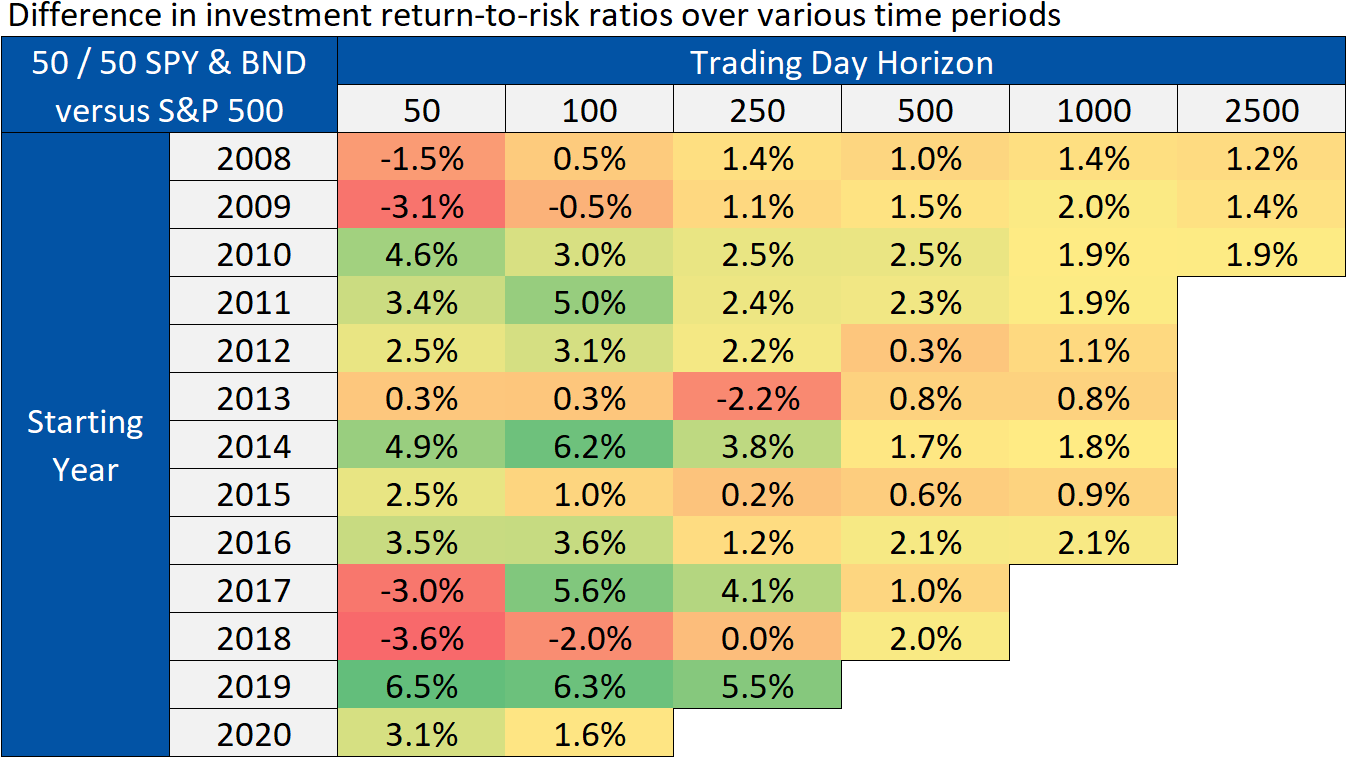
When we put both sides together, we see that a 50/50 split isn’t that bad. The risk advantage outweighs the return advantage in this framework. There are very few periods that do worse than a pure stock portfolio:
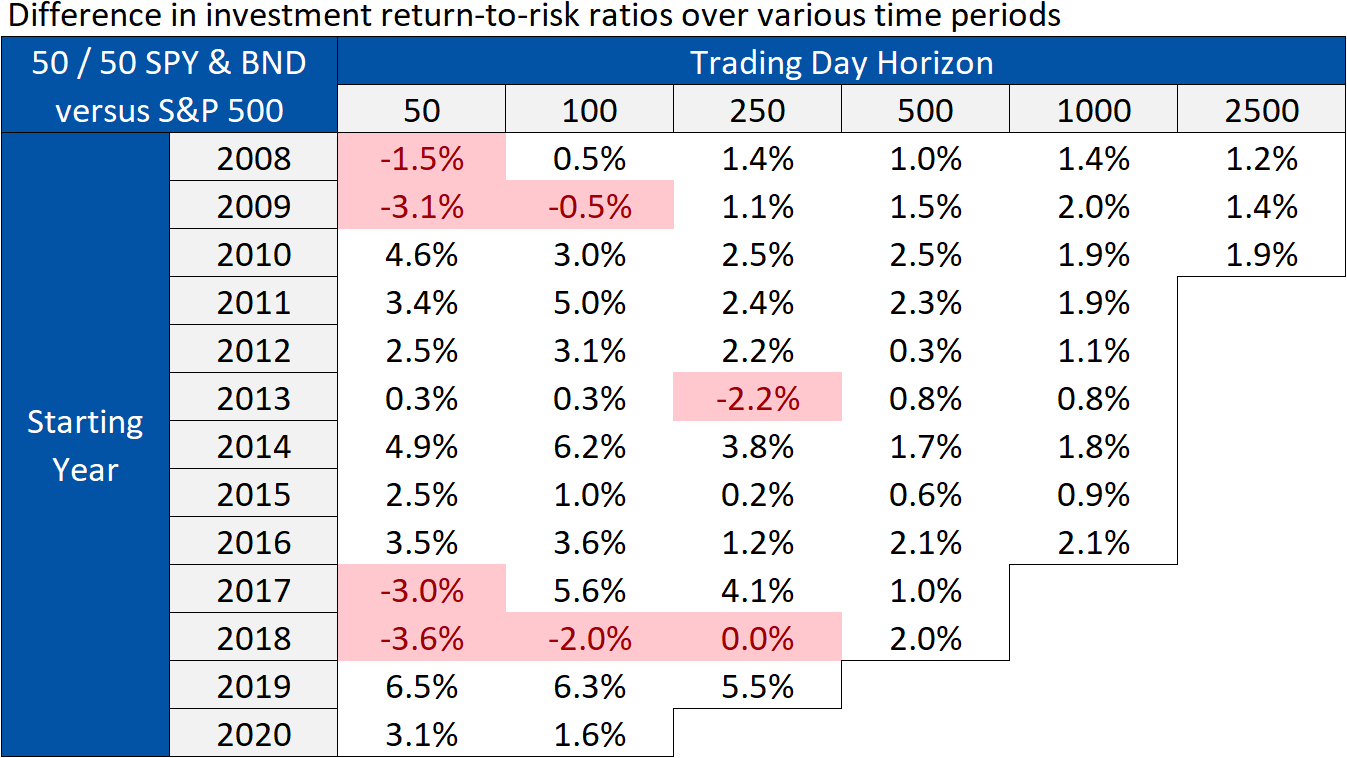
What this suggests is that a split portfolio is probably closer to the efficient frontier than a pure stock portfolio. The trouble is, there are plenty of efficient portfolios or even optimal portfolios out there that don’t give us much return. Technically, if we want zero risk, 100% cash is an “optimal” portfolio. And, at the end of the day, people would rather brag about having more profit than having more efficiency with their investments.
There is also one more critical insight lurking in this analysis. If we look at 2019, we see that a 50/50 portfolio does better than a pure stock portfolio even though 2019 was one of the best years for stocks ever. How could that be?
It’s because our definition of risk does not discriminate between upside risk and downside risk. Even though the stock market was mostly going up in 2019, we still count those large moves against our deviation. That doesn’t seem like something we would want to penalize in reality. So, we will look at another risk measure in the future to account for this. Until then, let’s finally lower our bond allocation to a level more in line with our goals and see where our portfolio stands next.